A rules-based approach to investing in the US market.

Fully data-driven. No human bias. Designed for stability and long-term outperformance.

Performance at a glance

AFM’s cumulative performance and added value versus the S&P 500, Dow Jones and NASDAQ Composite.

Loading current data…

AFM vs S&P 500
—
—
added value
Since inception
AFM vs Dow Jones
—
—
added value
Since inception
AFM vs NASDAQ Composite
—
—
added value
Since inception
  • AFM Return (—)
  • S&P 500 (—)
  • Outperformance vs S&P 500

Loading latest performance data…

Annual and cumulative performance returns in percent. Loading performance data…
Investment Year Cumulative
AFM——
S&P 500——
Dow Jones——
NASDAQ Composite——
Past performance is not indicative of future results.

Explore AFM’s historical record or follow today’s performance.
Want to know more about AFM?

Learn more about how AFM works and find answers to common questions.

Explore our FAQ

Investment management without human emotion.

AFM is a Swiss-developed, data- and mathematics-driven investment procedure operating directly in the investor’s own brokerage account.

Why Choose AFM?

Data-Driven

A procedure, not a portfolio manager.

AFM replaces forecasting, opinions and discretionary reactions with a disciplined autonomous process based on data, mathematics and systematic execution.

Broader Diversification

AFM includes all 500 companies in the S&P 500, providing broad market coverage and reliable long-term growth.

Safety First

What AFM deliberately avoids:
  • No human intervention in investment decisions
  • No market timing based on news or sentiment
  • No margin trading
  • No short selling
  • No derivatives, futures or options

Consistent Growth

AFM has outperformed traditional large-cap funds over time by staying systematic and avoiding emotional decision-making.

Who is it for? AFM spans the entire S&P 500 and is primarily intended for institutional investors, Family Offices and High-Net-Worth Individuals, where sufficient capital allows broad diversification across the index and efficient execution.

AFM is equally well suited to long-term investors seeking to build and preserve wealth across generations — for example, education funding, property acquisition and retirement planning — where consistency and capital preservation are paramount. See history

How It Works

Concept

AFM is a data-driven application that uses mathematics instead of subjective judgment. By removing human bias, it delivers consistent results over time. With a unique service charge and no hidden commissions, it remains a highly cost-effective solution.

Setup & Configuration

LX InfoTech Sàrl acts as your partner, providing personalized account setup and ongoing support. Each portfolio is uniquely tailored to reduce volatility and align perfectly with your specific investment goals.

Get Started

  • Full ownership: Assets stay safely in your own account.
  • Trading access: LX InfoTech receives trading rights only.
  • Automated: The system operates directly in your account.
  • Flexible: Complete freedom to pause or exit at any time.

If you would like to receive further information or discuss whether this approach is appropriate for you:

Arrange a Consultation

All enquiries are treated with strict confidentiality.

AFM
frequently asked questions

Clear answers about how AFM works, asset protection,
performance, costs and getting started.

What is AFM really good at?

AFM focuses on preserving and growing wealth over the long term. It is suited to Family Offices, high-net-worth individuals and investors setting capital aside for future needs.

Its disciplined approach allows gains to compound: returns become part of the capital on which future returns are earned.

What exactly is AFM?

Autonomous Fund Management (AFM) is a Swiss-developed investment procedure for US equity portfolios. It operates in the investor’s own brokerage account and generates investment decisions from market data using predefined mathematical rules, without human discretion, forecasts or opinions.

  • Data-driven decisions Market data and predefined mathematical rules.
  • Swiss-developed procedure For US equity portfolios.
  • Your own brokerage account AFM operates directly in your account.
How has AFM performed?

The homepage shows the latest results and comparisons with the S&P 500, Dow Jones and NASDAQ Composite.

For a fuller view, open History and select Relative Performance, Comparison and Show Details.

Then review several periods, from Current Month to Current Year, then 1, 2 and 5 to see how results vary over time.

How are my assets protected?

Your assets remain in your own account with your broker or custodian, and you retain ownership. AFM has trading authority only: it does not take custody, withdraw cash or transfer securities. We recommend a master/sub-account structure for additional protection.

  • Assets remain in your account You retain ownership.
  • Trading authority only No custody, cash withdrawals or securities transfers.
  • Master/sub-account structure Recommended for additional protection.
How is AFM different from traditional management?

Traditional managers use research, judgement and forecasts to select investments. AFM applies a systematic process across the S&P 500 universe, rather than concentrating on a small group of popular stocks. Its investment decisions do not depend on a manager’s changing views.

  • Systematic process Investment decisions follow a consistent process.
  • S&P 500 universe A broad investment universe.
  • Independent of changing views No reliance on a manager’s changing opinions.
Does AFM use Artificial Intelligence?

No. AI systems depend on human input for their training, objectives and instructions. AFM makes investment decisions solely from market data and predefined mathematical rules, applied consistently without ongoing human input.

This consistency explains AFM’s stability when compared with traditional funds.

  • No AI in investment decisions Market data and predefined mathematical rules.
  • Consistent application No ongoing human input.
Does AFM use leverage, derivatives or short selling?

No. AFM invests only in shares of companies within the S&P 500 universe. It uses no leverage or margin trading, short selling, options, futures or other derivatives.

  • No leverage, derivatives or short selling
  • S&P 500 shares only
What is the minimum investment?

The minimum investment is USD 1 million. This provides sufficient capital to spread investments effectively across the full S&P 500 universe and implement AFM’s strategy.

Smaller portfolios would limit this coverage, while transaction costs and related charges would absorb a disproportionate impact on returns.

  • Minimum investment USD 1 million
  • Coverage across the full S&P 500 universe
What does AFM cost?

AFM charges an annual service fee of 0.75% of assets under management, with no performance fee or commissions. Institutional terms are available for larger allocations.

  • 0.75% per year of assets under management
  • No performance fee or commissions
  • Institutional terms for larger allocations
Can my bank, Family Office or adviser use AFM?

AFM works for banks, Family Offices and independent advisers. It does not replace them. They retain the client relationship, set their own fees and remain the client’s point of contact. AFM provides portfolio management only and has no ties to the end client.

  • You retain the client relationship
  • You set your own fees
  • AFM provides portfolio management only
Can I stop using AFM?

Yes, at any time. Assets remain in your own account.

  • You can stop at any time
  • Your assets remain in your account
Why trust a procedure without human intervention?

The purpose is to maintain a consistent investment discipline and avoid emotional reactions. LX InfoTech monitors and maintains the system, while investment decisions remain autonomous.

  • Consistent investment discipline
  • Avoids emotional reactions
  • Monitored and maintained by LX InfoTech
AFM outperformed the DJIA by over 50 percentage points in five-plus years. Where’s the catch?

The S&P 500 represents the US stock market far more accurately than the Dow Jones, an old-fashioned benchmark first introduced in 1896 and now 130 years old. They are fundamentally different types of indexes.

AFM’s success is a combination of curiosity and common sense. There is no catch.

  • S&P 500 represents the US stock market
  • Dow Jones was introduced in 1896
  • Curiosity and common sense

Still have questions?

We are here to help.

Origins of AFM

Autonomous Fund Management (AFM) originated from a concept conceived by Peter Seilern, who sought a fundamentally different approach to investing in equity markets.

Early work, including Computer-Assisted Trading (CAT), demonstrated that investment decisions could be improved through data-driven, mathematical processes rather than human judgment.

Practical implementation, however, was not feasible at the time. Critical elements, such as reliable internet connectivity, cloud computing, real-time market data, instant trade execution, and sufficiently low transaction costs, were not yet available.

It was not until the early 2000s that these technological conditions began to emerge, and thanks to further development, the concept evolved into a workable framework.

Ten years ago, in collaboration with HES-SO Valais (University of Applied Sciences of Western Switzerland), the system was further refined and adapted for practical application.

This process culminated in the launch of AFM in its current form—a self-sustaining, data-driven investment procedure operating entirely without human intervention.

LX InfoTech Sàrl was subsequently established to support the deployment of AFM, providing dedicated services to investors while ensuring the system’s ongoing advancement.

Today, AFM is further enhanced through the integration of artificial intelligence while remaining firmly anchored to its founding principle: the complete absence of human judgment in investment decisions.

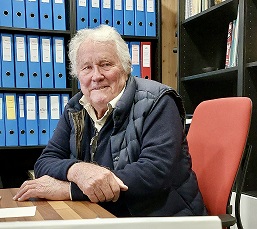
Portrait of Peter Seilern

Peter Seilern

Peter Seilern, now inactive, earned his Master's degree in Physics at the EPUL, the Federal Polytechnic School of Lausanne (EPFL). He gained experience as a research engineer at Litton Industries' Guidance and Control Systems Division in California before spending three years in New York as an associate at Dillon, Read & Co. Inc.

Upon his return to Switzerland, he pioneered the development of Computer-Assisted Trading (CAT), a system that enables investors to trade securities depending on performance metrics and other criteria.

Autonomous Fund Management (AFM), an extension of CAT, was first introduced in 2007 and provides investors with a data-driven approach to managing their assets. In early 2019, he collaborated with HES-SO Valais to launch the current version of AFM.

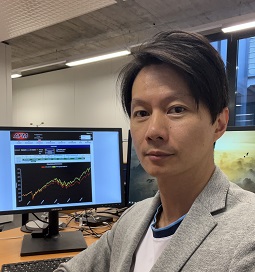
Portrait of Leyun Xia

Leyun Xia

Leyun Xia was born in Shanghai, where he studied French at university. At the age of 21, he moved to Switzerland to continue his studies and after a language stay allowing him to perfect his French, he joined the HES-SO Valais where he obtained a Bachelor’s Degree in computer science and a Master's in Business Administration.

He then worked for 10 years as a research scientist at the same university, participating in projects devoted to the fields of data mining and machine learning.

In 2017 he paired with Peter Seilern as part of a research project at HES, playing a key role in the development and testing of AFM, before successfully deploying the system into a live environment in mid-2019.

Leyun founded LX InfoTech Sàrl to continue developing AFM’s program in a fast-changing financial market. The company also provides an exclusive service for AFM account holders, taking responsibility for setting up accounts and their ongoing maintenance.

Stay Informed

Receive our regular performance updates and market insights.

AFM Outperformance Chart